AI in Banking: From Fraud Detection to Smarter Services
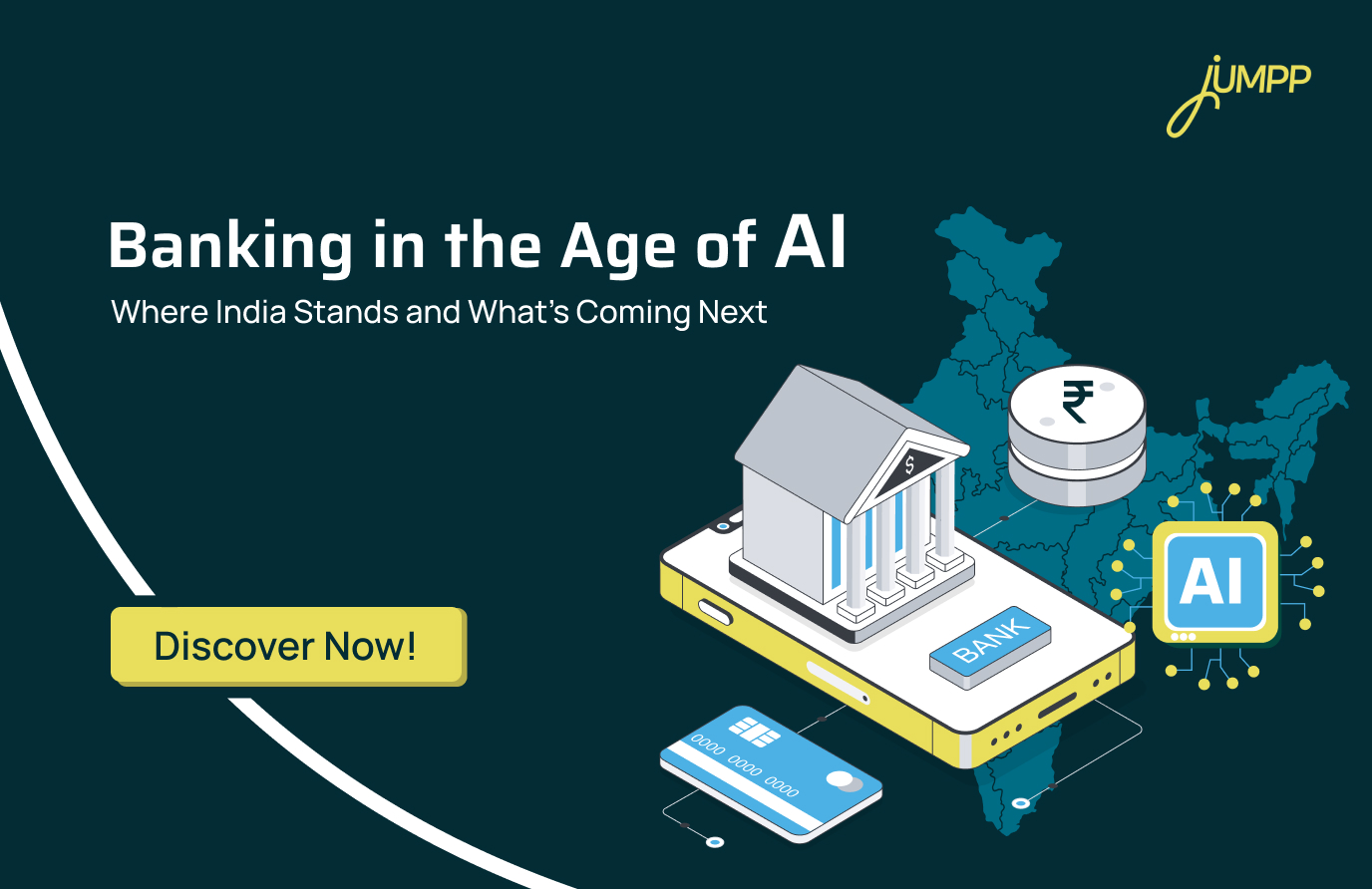
Blocked a suspicious card payment? Got an instant reply from your bank’s chatbot? Or received a banking alert that felt surprisingly relevant? AI may already be working behind it.
AI in Indian banking is increasingly being used to detect unusual transactions, assist customers, process information and automate routine banking tasks.
But how does artificial intelligence actually work in banking, and what does it change for customers?
Let’s understand.
What is AI in Banking?
AI in banking refers to the use of artificial intelligence technologies to analyse data, automate processes and support banking services and decisions.
Banks can use technologies such as Machine Learning (ML), Natural Language Processing (NLP) and Generative AI to process large amounts of information and identify patterns more efficiently.
Open a zero-balance savings account online!
How Is AI Used in Indian Banking?
Here are some latest AI banking trends in India –
1. Fraud Detection and Security
Fraud detection is one of the important use cases of AI in banking.
AI systems can analyse transaction patterns and flag activity that appears unusual. For example, a transaction from an unfamiliar device, location or spending pattern may trigger additional checks.
Banks can use such systems alongside other security measures to identify potential fraud more quickly.
Read now: How AI detects fraud.
2. Lending and Credit Assessment
AI can also assist banks while assessing borrowers.
Instead of relying entirely on manual document checks, AI systems can help process information from bank statements, financial records and other permitted data sources.
This can make parts of the lending process faster and help banks assess credit information more efficiently.
The final lending process, however, remains subject to the bank’s policies, risk controls and applicable regulations.
Know how to make credit card bill payments from another credit card!
3. Customer Support
Chatbots and virtual assistants are among the most visible examples of AI-powered banking services.
They can help customers with routine queries such as:
- Checking account-related information
- Understanding banking services
- Finding common transaction details
- Navigating digital banking features
For more complex problems, customers may still need assistance from a human representative.
4. Personalised Banking
Banks can use AI to understand customer behaviour and provide more relevant experiences.
For example, patterns in transactions or spending may help a bank provide relevant alerts, reminders or information about its services.
This allows banking experiences to become more personalised instead of offering the same communication to every customer.
5. Document Processing
Banking involves large volumes of documents, from account-opening forms to financial statements.
AI can help extract, organise and review information from these documents, reducing some of the manual work involved.
These AI banking solutions can be particularly useful in processes involving large amounts of information.
6. Generative AI in Banking
Generative AI in banking takes AI beyond analysing existing patterns.
It can assist with tasks such as:
- Summarising documents
- Drafting responses
- Retrieving internal information
- Assisting customer-service teams
- Supporting internal research and workflows
However, generative AI can sometimes produce incorrect information. Banks therefore need appropriate controls and human oversight when using it.
What Are the Benefits of AI in Banking?
The benefits of AI in banking can be seen across both customer experience and bank operations.
- Faster processing: AI can automate parts of document review, customer support and other repetitive processes.
- Better fraud monitoring: AI can analyse large numbers of transactions and flag unusual patterns for further checks.
- 24/7 customer assistance: AI-powered chatbots can handle many routine queries even outside regular banking hours.
- More personalised services: Banks can use data patterns to provide more relevant alerts, information and experiences.
- Improved efficiency: Automating repetitive tasks can allow employees to focus on cases that require human judgement.
What are the Risks of AI in Banking?
While AI in the banking industry can improve efficiency, it also introduces risks.
- Data privacy: AI systems may process large amounts of customer information, making secure data handling important.
- Bias: If an AI model is built or trained using biased data, its outputs may also reflect those biases.
- Lack of explainability: Some AI models can make it difficult to understand exactly how an output was reached.
- Incorrect AI responses: Generative AI can sometimes generate inaccurate or misleading information.
- Cybersecurity: As banks use more advanced technology, protecting AI systems and financial data from misuse becomes increasingly important.
This is why governance, security controls and human oversight remain important when banks deploy AI.
Traditional Banking vs AI-Powered Banking
Traditional banking relies more on manual processes and predefined rules, while AI-powered banking uses artificial intelligence to analyse data, automate tasks and improve services.
| Area | Traditional Approach | AI-Powered Approach |
| Fraud Monitoring | Predetermined rules and manual review | Pattern analysis and automated alerts |
| Customer Support | Branch, phone or human support | Chatbots and virtual assistants alongside human support |
| Credit Assessment | Manual checks and conventional data | AI-assisted analysis of permitted financial data |
| Documents | Manual review and data entry | Automated extraction and processing |
| Customer Experience | Broad, standard communication | More personalised interactions |
AI does not necessarily remove traditional banking processes. In many cases, it works alongside them.
How Is jAI Bringing AI Closer to Everyday Finance?
AI in financial services is not limited to banks. It is also becoming part of the way people access and understand financial information.
jAI, the AI-powered assistant on jUMPP, is one such example. It is your finance buddy that helps track expenses, create personalised budgets, set spending limits, and make smarter money decisions with AI-powered insights.

Have a Money Question? Ask jAI
From understanding financial terms to exploring everyday money questions, get answers in a simpler, conversational way with jAI on jUMPP, an AI-powered finance app.
AI in Banks- FAQs
The role of AI in banking is to support better decision-making, strengthen digital banking, improve financial inclusion and help banks manage risks while maintaining human oversight.
The future of AI in banking is likely to move beyond chatbots and basic automation. Generative AI and more autonomous AI systems could assist with increasingly complex workflows, including document analysis, compliance processes, customer support and internal operations.
AI-powered chatbots and virtual assistants can answer common queries, provide support outside regular banking hours and direct more complex issues to human representatives.
AI can analyse transaction patterns and identify unusual behaviour that may indicate fraud. Suspicious activity can then be flagged for additional checks.
AI can help banks analyse financial information and other permitted data during credit assessment. Lending decisions remain subject to the bank’s policies, risk controls and applicable regulations.
Risks include data privacy concerns, cybersecurity threats, biased models, lack of explainability and inaccurate AI-generated information.
Generative AI can help with document summaries, information retrieval, customer support and internal workflows. Banks need appropriate controls because AI-generated information can sometimes be inaccurate.
AI may automate routine banking tasks, but human involvement remains important for complex customer queries, risk management, compliance and decision-making.