Is Artificial Intelligence in Risk Management the Shield We Needed or a Risk Itself?
What if a bank could spot a suspicious transaction before you even noticed something was wrong?
Or an insurance company could identify unusual claims without manually reviewing thousands of records?
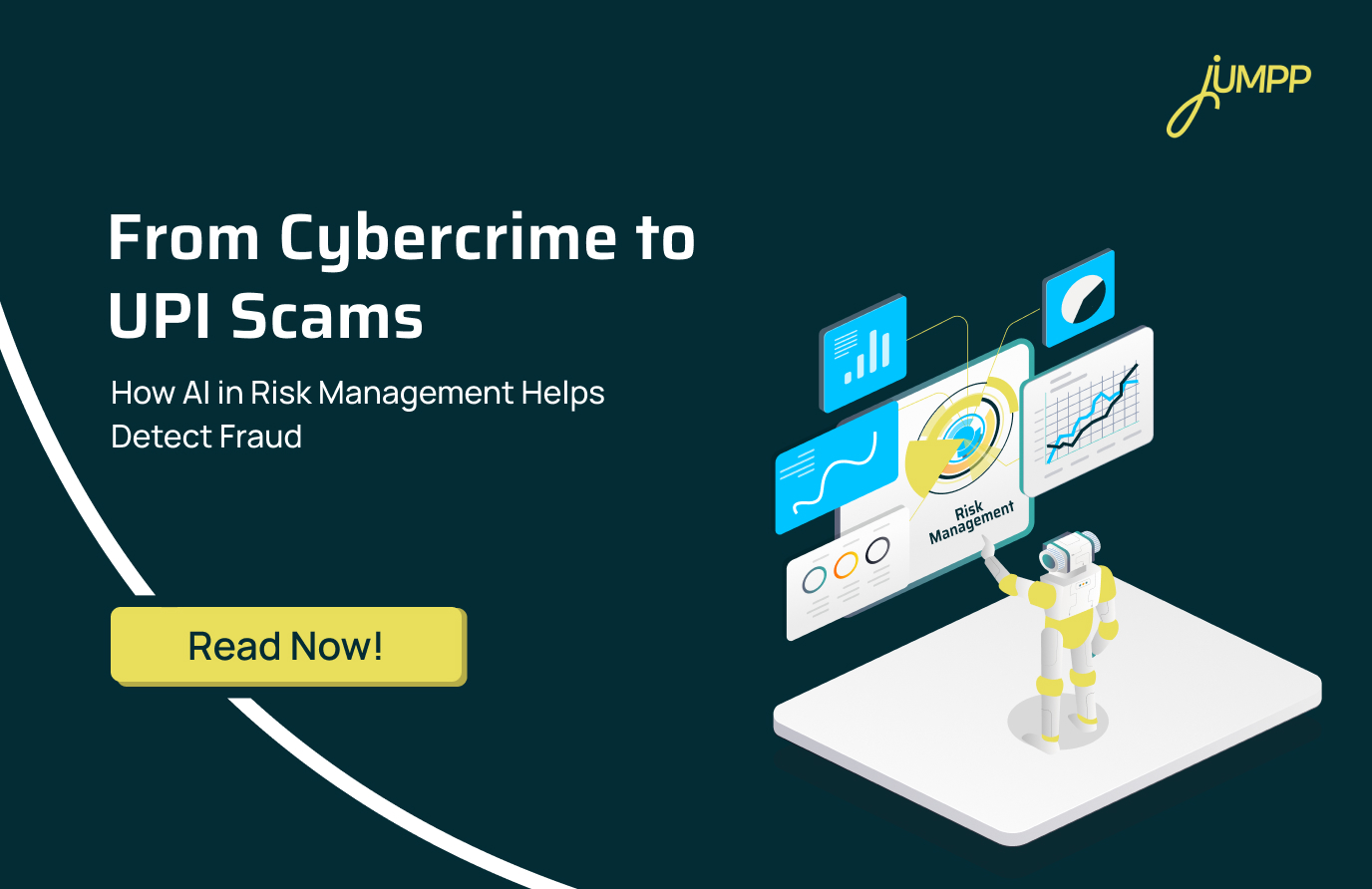
This is where artificial intelligence in risk management is making a difference.
However, relying on AI also introduces challenges, from inaccurate predictions to data privacy concerns.
So, how does AI help manage risks, and where can it go wrong?
Let’s see!
What Is Artificial Intelligence in Risk Management?
AI in risk management refers to using technologies such as machine learning (ML), natural language processing (NLP), and predictive analytics to identify, assess and reduce financial and operational risks.
For example: Banks use AI to flag suspicious UPI transactions. Similarly, insurance companies use it to identify unusual claims that may require further investigation.
What are the Latest Applications of AI in Risk Management in Indian Banking & Finance
Artificial intelligence in risk management helps banks, insurers and financial institutions identify potential threats, detect unusual activity and make timely decisions using data.
Here are four practical applications of AI in risk management in India.
1. UPI and Banking Fraud Detection
Ever received a fraud alert after an unusual banking transaction?
AI can analyse transaction amounts, login behaviour, device information and spending patterns to identify suspicious activity.
Example: Suppose you make a ₹2,000 UPI payment in Delhi. Shortly afterwards, someone attempts to access your account from an unfamiliar device. An AI-based fraud detection system may flag the unusual activity and trigger additional verification.
Related reading: UPI 123PAY: How to Make UPI Payments Without Internet
2. Credit Risk Assessment
Banks and lending platforms use AI to assess whether borrowers are likely to repay their loans.
Along with traditional credit information, some lenders may use permitted alternative data, such as transaction history and repayment patterns. This is subject to applicable privacy and lending requirements.
Example: A small business owner with limited credit history applies for a loan. AI may help the lender analyse eligible business transaction records and payment patterns to assess repayment risk.
3. Insurance Fraud Detection
AI helps insurance companies review claims and identify information that may require further investigation.
It can analyse documents, photographs and claim histories to detect inconsistencies.
Example: A person submits photographs of a damaged car while filing an insurance claim. AI may identify unusual image patterns or inconsistencies and flag the claim for manual review.
Please note that a flagged claim does not automatically mean fraud has occurred.
[Am I Underinsured? Find Out How Much Coverage You Need]
4. Compliance and Money Laundering Detection
Financial institutions use AI to monitor transactions and identify patterns that may indicate money laundering or other suspicious financial activity.
Example: If funds move rapidly through multiple accounts in an unusual pattern, AI may flag the transactions for further examination.
This helps compliance teams prioritise potentially suspicious activity.
What are the Benefits of AI in Risk Management?
AI for risk management can help organisations analyse information faster, improve risk monitoring and reduce repetitive manual work.
However, its effectiveness depends on data quality and how the systems are designed.
1. Faster Fraud Detection
AI can analyse large volumes of transactions and flag unusual patterns for investigation.
2. Improved Risk Forecasting
Machine learning models can identify relationships between different risk factors, helping organisations estimate potential credit, market or operational risks.
3. More Efficient Data Analysis
AI can group transactions or customers based on relevant patterns, supporting more detailed risk assessments.
4. Reduced Manual Work
Automating routine checks can help employees spend more time reviewing complex cases and making decisions.
5. Better Compliance Monitoring
AI can assist with transaction screening, record analysis and identifying activities that may require regulatory review.
What are the Risks of Using AI in Risk Management?
Artificial intelligence risk management can lead to inaccurate predictions, biased decisions and data privacy concerns.
1. Inaccurate Predictions
AI models may produce incorrect results when information is incomplete, outdated or unsuitable.
2. Algorithmic Bias
If training data contains biases, AI may make unfair decisions, particularly in areas such as loan eligibility or insurance assessment.
3. Data Privacy Concerns
AI systems may process sensitive financial and personal information. Weak security controls can expose this data to unauthorised access.
4. Model Performance Changes
AI models may become less accurate as customer behaviour, economic conditions and market patterns change. This is known as model drift.
5. Lack of Transparency
Some AI systems make decisions that are difficult to explain, making it challenging to identify errors or understand why a particular result was produced.
6. Overdependence on Technology
AI cannot eliminate every risk. That is why human supervision remains important, especially when decisions affect customers’ finances or access to services.
How Is AI Risk Management Regulated in India?
India does not have a single comprehensive AI law. Instead, artificial intelligence is governed through existing legislation and sector-specific regulatory frameworks.
Here’s who regulates AI use across India’s financial sector:
- RBI: Oversees banks and other regulated financial institutions, including their use of AI-based lending, credit assessment and financial models.
- SEBI: Regulates AI-related activities in securities markets, including algorithmic trading and the responsibilities of market intermediaries.
- IRDAI: Oversees insurers using technology for underwriting, claims processing and other insurance operations.
Existing legislation, including the Information Technology Act, 2000 and the Digital Personal Data Protection Act, 2023, also forms part of India’s legal framework for technology and personal data.
AI is changing how financial institutions identify and manage risks. For individuals, understanding everyday financial activity is also an important part of money management.
Manage Your Money Smarter with jAI by jUMPP
From tracking daily expenses to understanding your spending patterns, jAI helps you manage your finances with AI-powered insights and personalised budget suggestions.
Download jUMPP, an AI-powered expense tracker app.
AI in Risk Management- FAQs
AI risk management is the process of identifying, assessing, reducing and monitoring risks associated with artificial intelligence systems. These include data privacy issues, biased decisions, inaccurate predictions and cybersecurity threats.
Banks use AI for credit scoring, fraud detection, compliance tracking, and loan underwriting. It improves decision-making while reducing manual effort and operational costs.
AI algorithms analyse historical data, daily stock movement, news, and market trends to make automated trade decisions. It powers high-frequency trading and portfolio optimisation.
AI can track global news, social sentiment, and real-time data to detect volatility triggers. It helps risk teams prepare for market shifts before they impact portfolios.
AI can identify patterns and short-term trends in stock prices based on past data. However, it cannot guarantee future performance due to market unpredictability. You must always do your research.
AI systems can malfunction due to faulty data, model errors, or unexpected market events. There is also a risk of herd behaviour if many systems act on similar signals.
In June 2026, the RBI proposed stronger accountability for AI systems used by banks and other regulated financial institutions. The proposals include independent model validation, customer access to human assistance and safeguards that allow institutions to override or deactivate AI systems when necessary.
Source: https://www.rbi.org.in/