What Is the Difference Between Term and Whole Life Insurance?
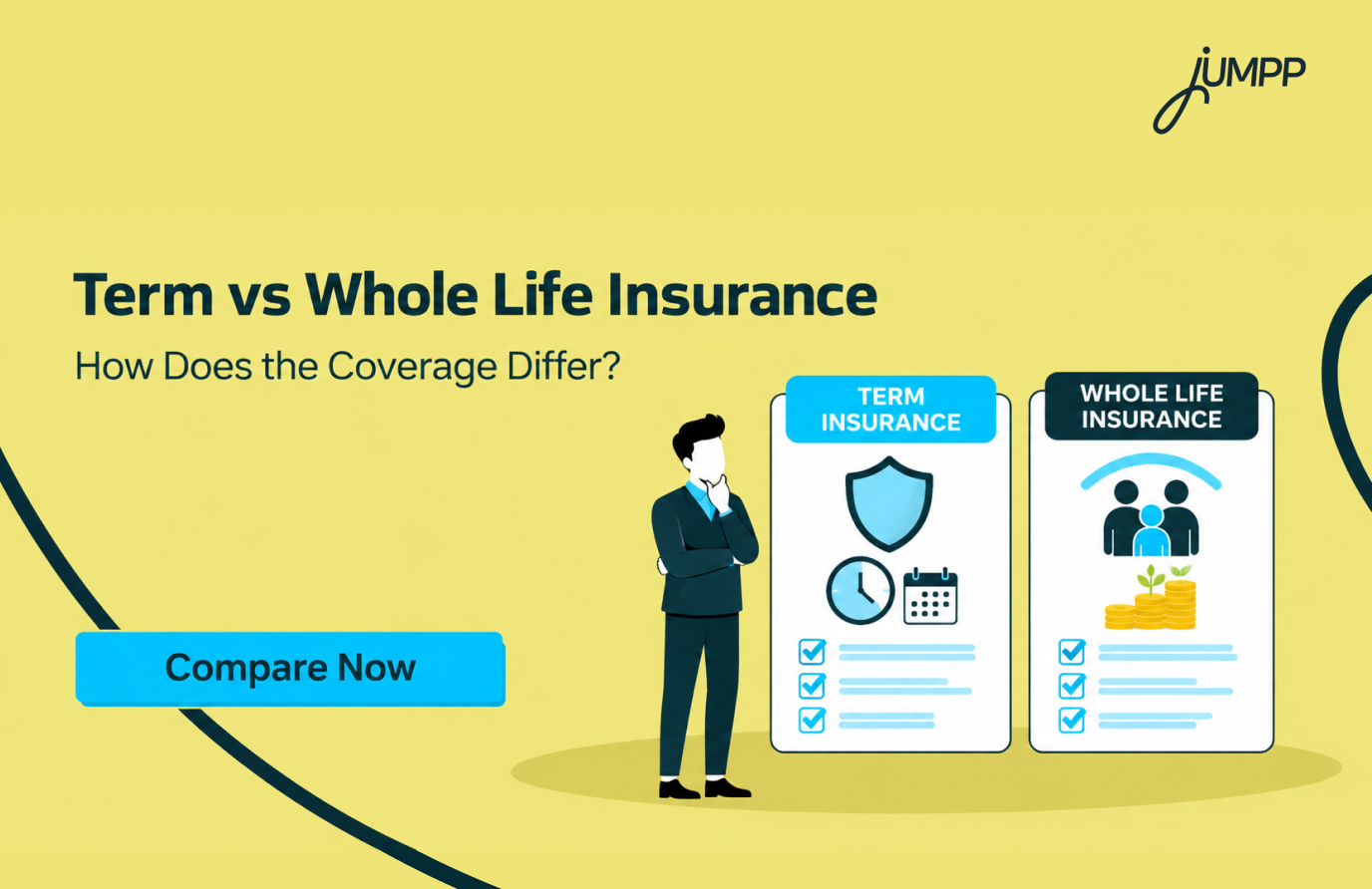
Life insurance can help protect your family financially, but not every policy provides protection in the same way. The coverage period, premiums and benefits can vary depending on the type of plan you choose.
Two common options are term insurance and whole life insurance. Both provide life cover, but they are designed to meet different protection needs.
In this blog, you will understand the difference between term and whole life insurance.
What Is Term Insurance?
Term insurance is a type of life insurance that provides financial protection for a specified policy term. If the insured person dies during the covered period, the death benefit is paid according to the policy terms.
What Are the Benefits of Term Insurance?
Term insurance allows you to choose life cover for a specified period based on the options available under the policy.
Some common benefits include:
- Defined coverage period: You can select a policy term based on the available options.
- Life protection: The nominee receives the applicable death benefit if the insured dies during the policy term.
- Generally lower premium: Pure term insurance generally costs less than whole life insurance for comparable cover.
- Choice of cover: Policies may offer different sum assured and policy-term options.
- Additional riders: Some policies may allow eligible riders for additional protection, subject to their terms.
The exact benefits, premiums and conditions vary across insurers and policies.
What Is Whole Life Insurance?
Whole life insurance is designed to provide death coverage without a fixed policy term. The applicable death benefit is paid according to the conditions specified in the policy.
What Are the Benefits of Whole Life Insurance?
The main benefit of whole life insurance is that it is designed for lifelong death coverage rather than protection for only a specified term. Other benefits depend on the structure and conditions of the particular policy.
These may include:
- Lifelong death coverage: The policy does not have a fixed term for death coverage.
- Death benefit: The applicable amount is paid to the beneficiary upon the insured person’s death, subject to policy conditions.
- Premium options: Premium payment structures may differ between policies.
- Additional benefits: Certain products may include savings-related or other benefits depending on their design.
- Riders: Eligible additional covers may be available with some policies.
Do not assume that every whole life policy offers the same savings, maturity or surrender benefits. These should be checked in the individual policy document.
Also understand the difference between Insurance and Assurance.
What Is the Difference Between Term and Whole Life Insurance?
Term insurance covers the insured for a specified period, while whole life insurance is designed without a fixed term for death coverage.
| Feature | Term Insurance | Whole Life Insurance |
| Coverage period | Specified policy term | No fixed term for death cover |
| Primary purpose | Life protection for a defined period | Lifelong life protection |
| Death benefit | Payable if death occurs during the covered term | Payable on death, subject to policy terms |
| Maturity benefit | Generally none in pure term insurance | Depends on policy design |
| Premium | Generally lower for comparable cover | Generally higher |
| Premium payment | As specified under the policy | Depends on the policy structure |
| Suitable for | People seeking protection for a defined period | People seeking lifelong death coverage |
Understanding your life insurance coverage is essential when choosing the right policy. Learn the sum assured meaning, how it works and why it matters when determining your life insurance coverage.
Term Insurance vs Whole Life Insurance: Which One Should You Choose?
Term insurance and whole life insurance serve different coverage needs, so one is not automatically better than the other. The choice depends on how long you need protection, your financial responsibilities, budget and the benefits you want from the policy.
- Term insurance may be considered when your primary requirement is life cover for a particular period.
- Whole life insurance may be considered when lifelong death coverage is an important requirement.
Before deciding, compare the policy benefits, exclusions, premiums and conditions rather than looking only at the type of insurance. IRDAI also advises buyers to understand product terms and choose insurance according to their financial needs.
What Happens When Term Insurance Expires?
When a standard pure term insurance policy reaches the end of its policy term, the life cover ends. If the insured survives the term, there is generally no maturity payment under a pure protection plan without a return-of-premium feature.
However, not every term product works identically. IRDAI’s product framework recognises pure term insurance products with or without return of premium, so you should check the specific policy benefits before purchasing.
What Should You Check Before Choosing Life Insurance?
Choosing life insurance involves more than comparing the premium amount. Consider whether the policy’s coverage period, benefits and conditions match your financial requirements.
Check the following:
- Required life cover
- Coverage period
- Premium amount and affordability
- Premium payment period
- Death benefit
- Maturity or survival benefits, if applicable
- Policy exclusions
- Available riders
- Surrender provisions, where applicable
- Claim-related conditions
- Other policy terms and conditions
IRDAI advises buyers to understand the scope of cover, exclusions, costs and policy conditions before purchasing insurance.
Conclusion
The right life insurance policy should fit the period for which your family may need financial protection and the amount you can comfortably pay towards premiums.
Rather than choosing only on the basis of cost or policy type, understand what the policy covers, for how long and under what conditions.
How Much Life Insurance Do I Need? A Simple Guide to Choosing the Right Cover
FAQs
Term insurance provides life cover for a specified period, while whole life insurance provides death coverage without a fixed term. Their premiums and other policy benefits can also differ.
Term insurance or whole life insurance is not universally better for everyone. The appropriate choice depends on your required coverage period, budget, financial responsibilities and the benefits offered by the policy.
Whole life insurance generally has a higher premium than pure term insurance for comparable cover because the coverage structure is different. Actual premiums depend on factors such as the product, sum assured, age and underwriting.
When term insurance expires, its life cover generally ends. A standard pure term plan without a return-of-premium feature generally does not provide a maturity payment if the insured survives the policy term.
Whole life insurance is designed to provide death coverage without a definite policy term, subject to the conditions of the individual policy.
Term insurance cannot automatically be converted into whole life insurance. Whether conversion is available depends on the insurer, product and conditions stated in the policy.
For young adults, the choice between term and whole life insurance depends on their financial dependants, required coverage period, budget and long-term protection needs. Age alone should not determine the choice.
A maturity benefit is not something you should assume with every whole life policy. Whole life primarily refers to the duration of death coverage, while maturity, survival or other benefits depend on the individual product.
Pure term insurance is generally cheaper for comparable cover because it primarily provides death protection for a specified period and generally does not provide a maturity benefit.
Choose between term and whole life insurance by comparing your required coverage period, sum assured, premium affordability, financial responsibilities and policy benefits. Always check the individual policy’s exclusions and conditions before deciding.