How to Reduce Monthly Expenses: 10 Practical Ways to Save Money

Reducing monthly expenses starts with understanding your spending habits. Frequent UPI payments, unused subscriptions and unplanned purchases can gradually affect your household budget.
So, how much of your monthly spending could you actually reduce?
Let’s explore 10 practical ways to reduce monthly expenses, avoid unnecessary purchases and build better money habits.
How Can You Reduce Monthly Expenses?
To reduce monthly expenses, you must start by tracking your every expense, separating essential and non-essential spending, setting a realistic budget and reviewing recurring costs. Small changes to everyday spending can help you save money without cutting back on necessities.
Here are 10 practical ways to reduce household and monthly expenses-
1. Track Small UPI Payments and Daily Expenses
A ₹40 tea, a ₹150 snack or a ₹300 online purchase may not seem expensive. But frequent small payments can add up over a month.
What you can do:
- Track your UPI payments, cash purchases and card transactions for 30 days.
- Group expenses into categories such as groceries, transport, food and shopping.
- Use a personal expense tracker to identify where you’re spending more than expected.
Small Payments Add Up.
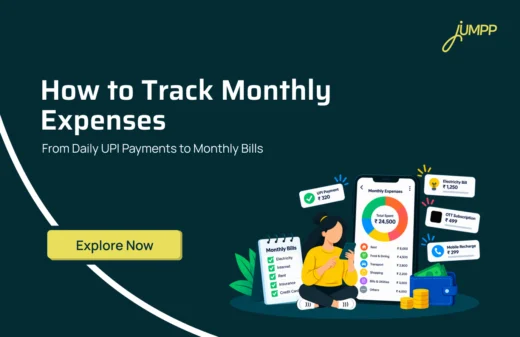
Use jUMPP for everyday payments and explore jAI to track expenses, set spending limits and plan your monthly budget.
Download jUMPP, an easy to use wealth management app in India.
2. Restructure Cash Flow with the 50/30/20 Budgeting Rule
The 50/30/20 rule helps you divide your take-home income into needs, wants and savings.
It provides a starting point:
- 50% for needs: Rent, EMIs, groceries, utilities and other essential expenses.
- 30% for wants: Dining out, entertainment, shopping and hobbies.
- 20% for savings: Emergency funds and other financial goals.
For example, if you earn ₹40,000 per month:
| Category | Allocation | Amount |
| Needs | 50% | ₹20,000 |
| Wants | 30% | ₹12,000 |
| Savings and financial goals | 20% | ₹8,000 |
This is a budgeting framework, not a fixed requirement. Adjust it based on your income, responsibilities and essential expenses.
3. Review Unused Subscriptions
OTT platforms, music apps, cloud storage and other services can continue charging you through automatic renewals.
What you can do to save yourself from these auto-renewing subscription traps:
- Check your bank statements for recurring payments.
- Identify subscriptions you rarely use.
- Compare overlapping services before deciding which ones to keep.
- Cancel subscriptions that no longer provide value.
Example: Cancelling subscriptions worth ₹199 and ₹299 per month could save ₹498 monthly, or ₹5,976 annually.
4. Reduce Electricity and Utility Bills
Electricity, mobile plans and broadband charges are recurring household expenses. Reviewing them regularly can help reduce avoidable costs.
What you can do:
- Switch off lights and appliances when they’re not needed.
- Compare energy-efficient appliances when replacing older devices.
- Check whether your mobile and internet plans match your actual usage.
- Review bills for unexpected charges.
Before purchasing a new appliance, compare its upfront cost with the potential savings.
5. Follow the 24-Hour Rule Before Shopping
Online sales, limited-time offers and one-click payments can make unplanned purchases tempting.
The 24-hour rule is a simple way to control impulse spending.
What you can do:
- Add a non-essential item to your wishlist instead of buying immediately.
- Wait at least 24 hours.
- Reconsider whether you need it and whether it fits your budget.
This gives you time to make a more deliberate purchase decision.
6. Plan Groceries Before Shopping
Groceries are essential, but unplanned purchases and food waste can increase your monthly household expenses.
What you can do:
- Plan meals for the week.
- Make a grocery list before visiting a store or using a delivery app.
- Compare prices per kilogram or litre.
- Check existing supplies before buying more.
- Avoid buying large quantities you may not use.
Example: If you reduce avoidable grocery spending by ₹500 each week, you could save ₹2,000 over four weeks.
7. Set a Budget for Food Delivery and Dining Out
Ordering food is convenient, but frequent orders, delivery fees and packaging charges can increase your monthly spending.
What you can do:
- Decide how much you can comfortably spend on dining out and food delivery.
- Check the total bill, including additional charges, before ordering.
- Plan home-cooked meals for some days of the week.
- Track spending against your monthly limit.
Example: Reducing monthly food delivery expenses from ₹4,000 to ₹2,500 would leave ₹1,500 available for other needs.
8. Review Your Daily Transport Costs
Fuel, parking, public transport fares and vehicle maintenance can take up a significant part of your monthly budget.
What you can do:
- Compare commuting options based on their total cost.
- Consider public transport or carpooling when practical.
- Combine nearby errands into fewer trips.
- Plan journeys to avoid unnecessary travel.
Choose options that balance affordability, time, convenience and safety.
9. Set Aside Savings When You Get Paid
If you wait until the end of the month to save, everyday expenses may leave little money available.
Instead, decide how much you can reasonably set aside after accounting for essential costs and financial obligations.
What you can do:
- Choose a manageable monthly savings amount.
- Consider an automatic transfer to a separate savings account.
- Keep emergency savings accessible.
- Adjust the amount when your income or expenses change.
Start with an amount you can maintain rather than committing to an unrealistic target.
10. Review Your Expenses at Month-End
Monthly expense management doesn’t end with creating a budget. You also need to check whether you’re following it.
What you can do:
- Compare your planned budget with actual spending.
- Identify categories where you exceeded your limits.
- Review unexpected or irregular expenses.
- Adjust next month’s budget based on what you learned.
Even a short monthly review can help you make more informed spending decisions.
Make Monthly Budgeting Easier with jAI on jUMPP
With jAI, your AI-powered finance buddy on jUMPP, you can:
- Track expenses to understand your spending.
- Create personalised monthly budgets based on your needs.
- Set spending limits to manage different expenses.
- Get AI-powered spending insights to understand your financial habits.
Download jUMPP, an expense tracker app and explore smarter ways to manage your everyday finances with jAI.
See how you can track your monthly expenses with jAI.
FAQs
You can start by cutting unnecessary expenses such as unused subscriptions, frequent food deliveries and impulse purchases. Review your mobile and internet plans, track daily spending and prioritise essential household costs.
Create a realistic budget that covers essentials, savings and personal spending. The 50/30/20 rule can be a starting point, but adjust the percentages based on your income and financial responsibilities.
Prioritise essential expenses and required debt repayments. If possible, allocate extra money towards high-interest debts, such as credit card balances or personal loans.
A personal expense tracker helps you monitor spending, identify unnecessary expenses and stay within your monthly budget.
Indian household can manage grocery shopping, reduce food waste, review recurring bills and set aside savings regularly to manage their expenses.